


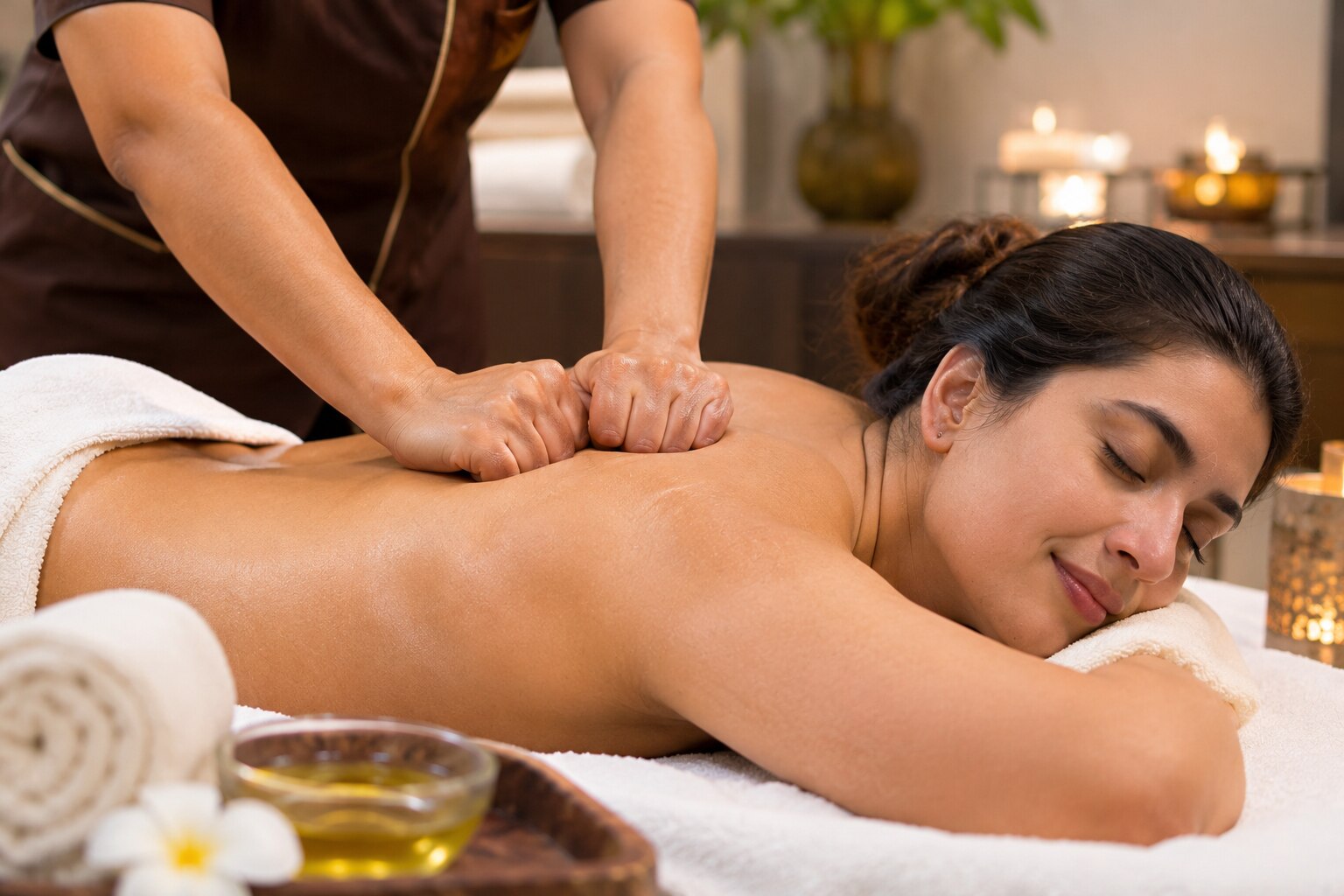
A deep tissue appointment involves more than lying down while pressure is applied: the therapist first screens your health, agrees on a treatment plan and checks your comfort throughout the session. You will know what to disclose, how draping and positioning work, what useful pressure feels like and how to compare a local provider before booking.
Key takeaways
- Discuss your treatment goal before any pressure is applied.
- Firm pressure should feel intense, not sharp, numb or unbearable.
- Expect private draping, position changes and regular comfort checks.
- Compare therapist credentials, hygiene, consultation quality and aftercare guidance.
What happens when you arrive and speak with the therapist?
If you searched for what happens during deep tissue massage for therapy Balaji Nagar, the first stage is a consultation, not immediate pressure. At arrival, confirm the exact treatment, practitioner’s identity and your treatment goal. Deep tissue massage therapy should be adapted to your body rather than delivered as an automatic full-body routine.
The therapist should ask:
- Where is the pain, stiffness or restricted movement, and when did it begin?
- Have you had an injury, fracture, operation or recent medical treatment?
- Do you have bleeding problems, uncontrolled high blood pressure, fever, cancer treatment, pregnancy or another significant condition?
- Do you take blood-thinning medication or any medicine that affects pain, sensation or bleeding?
- Do you have open wounds, rashes, sunburn, skin infection or unexplained swelling?
- Which areas should be avoided, what result do you want, and what pressure feels acceptable?
Answer plainly, including conditions that feel unrelated. Blood thinners, recent surgery, a fracture, fever or infected skin can require lighter work, avoiding an area or delaying the appointment. The therapist should explain the plan and obtain your consent before touching you.
Ask how consent, draping and pressure adjustments work. Exfoliation is separate from massage; a scrub or chemical exfoliant should not be added to irritated, broken or infected skin without a clear explanation and your agreement.
How are you positioned and covered during the treatment?
You change privately before the hands-on work, usually removing only the clothing that blocks the areas you want treated. The therapist should leave the room or turn away, explain where to place your belongings, and provide a clean sheet or towel. You remain covered except for the area being worked.
| Position | Area exposed | Why it is used |
|---|---|---|
| Prone, face down | Back, shoulders, or backs of the legs | Treats posterior muscle tension |
| Supine, face up | Front of the legs, arms, or shoulders | Treats anterior muscle groups |
| Side-lying | One side, hip, or shoulder | Supports comfort or access to one side |
| Seated | Neck, shoulders, or upper back | Helps when lying down is uncomfortable |
The therapist folds the drape back only over the selected area and replaces it before moving elsewhere. Breasts, genitals and buttocks stay covered; another method should be offered if a requested technique would compromise your comfort or privacy.
You control adjustments throughout a massage balaji nagar appointment. Ask for more or less coverage, a different position, a warmer or cooler room, quieter music, or no music. You can also ask the therapist to stop, avoid an area, or end the session without giving a reason.
Ongoing consent matters, not just the agreement given at the start.
What does the therapist do during the massage, and what should pressure feel like?
The therapist usually starts with broad, slow strokes to warm the muscles and assess how the tissue responds. This opening phase increases circulation through the working area and reveals tight bands, guarded movement or tender spots before deeper pressure begins. Deep tissue massage therapy is not a test of how much discomfort you can tolerate.
- The therapist uses palms and fingers with steady strokes along the muscle fibres, working at a slower pace than a relaxation massage.
- Once the muscles feel warmer, the therapist may use fingertips or thumbs to follow tight bands, cross areas of tension and work around restricted soft tissue.
- For larger muscles, an forearm can spread sustained pressure over a wider area without forcing a sharp point into the tissue.
- An elbow may address a small, dense area only when the position is controlled and the pressure remains tolerable.
- The therapist adjusts speed, angle, pressure and technique from your feedback instead of repeating an automatic full-body routine.
- Pressure is reduced gradually before the therapist moves to another area, then lighter strokes help settle the tissue.
Productive pressure can feel intense, tender or like a firm stretch, but it should remain manageable and never require you to brace against severe pain. Tell the therapist immediately about sharp, electric, burning or numb sensations, or pain that travels away from the treatment area.
Ask for less pressure at once; silence is not consent to continue.
How long does the appointment take, and what happens afterward?
Allow 75 to 90 minutes for a 60-minute hands-on appointment. The consultation and safety check take about 5 to 10 minutes, changing and settling take another 5 minutes, and the remaining time covers treatment. Confirm whether the advertised duration includes hands-on work before booking a massage Balaji Nagar appointment.
The session usually ends gradually rather than stopping after the deepest pressure. The therapist reduces pressure, uses slower strokes, checks how you feel, and gives you time to sit up before you dress.
- Drink to thirst and eat a normal light meal if you feel hungry.
- Walk gently and avoid strenuous exercise for the rest of the day if your muscles feel worked.
- Expect mild tenderness, tiredness or stiffness for a day or two when firm pressure is unfamiliar.
- Do not book another vigorous massage to push through worsening symptoms.
- Contact a medical professional for increasing pain, marked swelling, significant bruising, persistent numbness, weakness, fever or trouble moving the area.
Deep tissue massage can ease some muscle tightness for a short time, but it cannot repair a torn muscle or diagnose a nerve disorder. Tell the therapist if soreness feels sharp, burning or intolerable during treatment; pressure should be changed, not endured.
Seek medical advice before returning for massage if symptoms persist or if you have a recent injury, surgery or another untreated condition.
How should you compare a deep tissue provider in Balaji Nagar?
Compare a massage center near me or body spa near me by checking the person, process and premises—not the service name alone. “Massage Balaji Nagar” is a search phrase, not proof of medical qualification. Verify the exact address, practitioner’s full name, training or certification, treatment offered and recent independent reviews.
Ashiyana Massage Parlour- 08048035632 is one local option to assess using these same checks.
Ask these questions before booking:
- What conditions, medicines and recent procedures would make you modify or defer treatment?
- How do you handle blood thinners, pregnancy, fever, skin infection, open wounds, fractures, surgery and uncontrolled blood pressure?
- Which areas will you avoid, and how will you record my consent and pressure preference?
- Can I stop the treatment, change position or request more coverage at any time?
| Check | Good evidence | Warning sign |
|---|---|---|
| Practitioner | Named therapist explains training and experience | Staff avoid identifying who will treat you |
| Screening | Questions about injuries, medicines and health conditions | Immediate treatment with no health questions |
| Hygiene | Clean linens, washed hands and sanitised surfaces | Used sheets, strong odour or visibly dirty equipment |
| Consent | Draping, boundaries and pressure explained | Unrequested exposure or pressure |
| Reviews | Recent, detailed reviews mentioning the actual service | Only anonymous promises or guaranteed “detox” |
| Treatment type | Massage uses manual soft-tissue pressure | Exfoliation is presented as the same service |
Exfoliating treatments use a scrub, brush or chemical exfoliant on the skin; they do not replace massage. Avoid exfoliation over sunburn, broken, irritated or infected skin, and consent to it separately.
Related service
Deep Tissue Massage ₹3000 A deep pressure massage technique uses slower, more forceful strokes to target the deeper layers of muscles and connective tissues. View service → |
Frequently asked questions
What happens when you arrive for deep tissue massage therapy in Balaji Nagar?
You first discuss your treatment goal, pain areas, health history and pressure preferences with the therapist. Confirm the treatment and practitioner before the massage begins.
How are you positioned and covered during a deep tissue massage?
You lie on a massage table and remain covered with a sheet or towel. Only the area being treated is uncovered, and the therapist may ask you to change position.
What should deep tissue massage pressure feel like?
Pressure should feel strong and focused but tolerable. Tell the therapist immediately if you feel sharp pain, tingling, numbness or pressure you cannot relax through.
How long does a deep tissue massage appointment take?
The appointment includes consultation, changing, treatment and post-massage guidance, so the total visit lasts longer than hands-on massage time.
How should you compare a deep tissue massage provider in Balaji Nagar?
Compare the consultation process, therapist identity and training, privacy and draping practices, hygiene, communication about pressure and aftercare instructions.