

Thai massage is different from many familiar spa treatments because it combines rhythmic pressure with assisted stretching and body positioning.
Rather than relying mainly on oil-based gliding movements, traditional Thai massage often uses controlled compression and movements that resemble supported stretching exercises.
For people considering thai massage therapy, understanding its physical nature is essential before booking.
Understanding the Traditional Thai Massage Approach
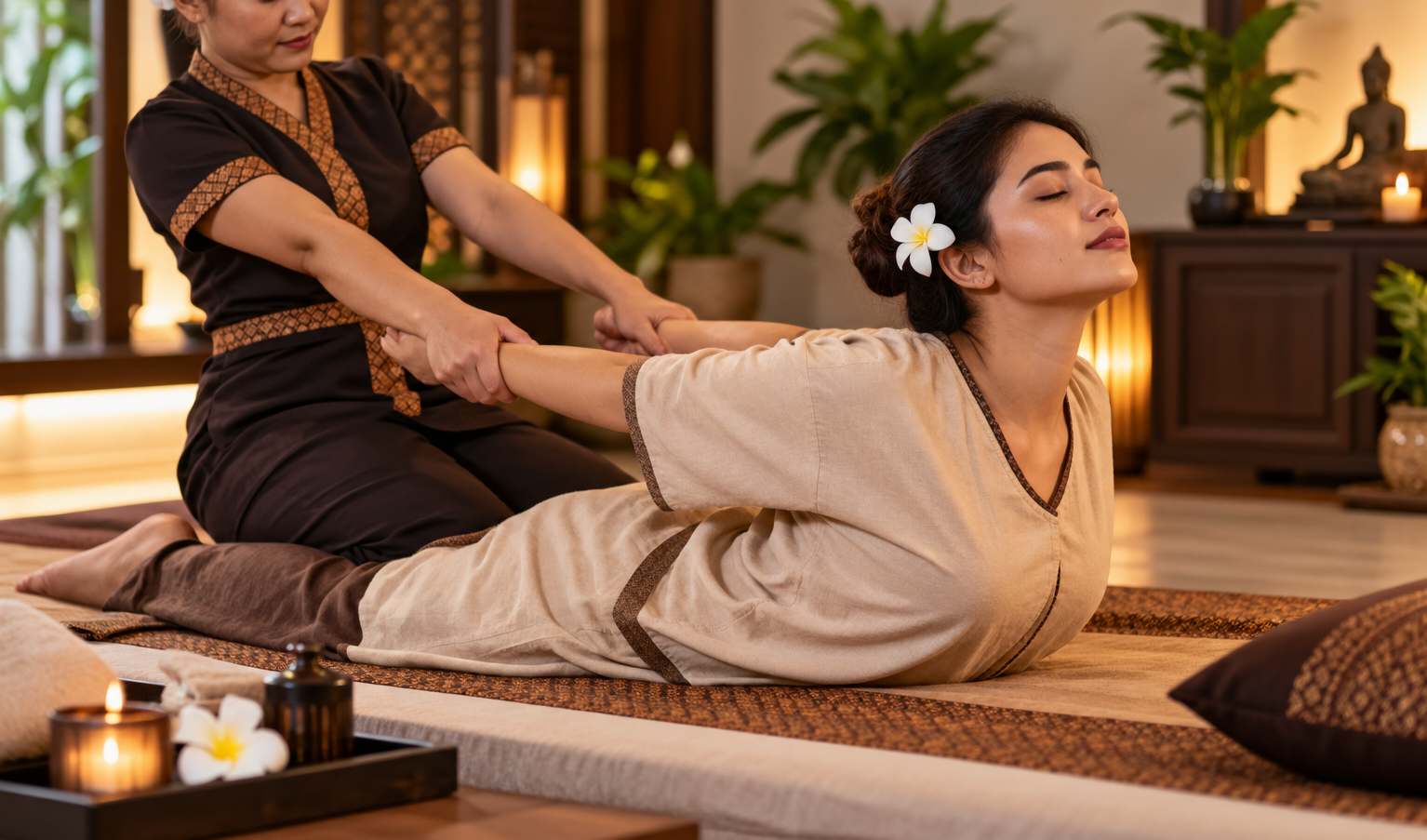
Traditional Thai massage may be performed on a padded floor mat while the client wears comfortable clothing.
The therapist uses hands, thumbs, forearms, and sometimes other body parts to apply controlled pressure.
Assisted stretches may involve the arms, shoulders, hips, and legs.
The therapist guides these movements while monitoring the client's comfort and mobility.
Some spas also offer Thai-inspired oil massage, which can differ substantially from traditional floor-based techniques.
Customers should clarify which version is available.
How Thai Massage Differs From Relaxation Massage
Swedish massage generally uses flowing strokes across the muscles.
Thai massage incorporates more movement, positioning, and stretching.
A client may be asked to change positions several times during treatment.
This approach can appeal to people who enjoy stretching and want a more movement-oriented massage experience.
However, greater movement does not necessarily mean better results.
A suitable session should respect the client's flexibility and physical limitations.
Who May Find Thai Massage Appealing
Adults who spend considerable time sitting may enjoy gentle stretching around the shoulders, back, and hips.
People with generally good mobility may also appreciate the combination of pressure and assisted movement.
In Pune, professionals travelling between Camp, Swargate, and commercial areas often spend long periods seated.
A Thai massage session may provide an opportunity to experience guided movement and relaxation outside the usual working routine.
Nevertheless, massage cannot replace regular exercise or correct prolonged inactivity by itself.
Important Precautions Before Booking
Thai massage may involve movements that are unsuitable for certain health conditions.
People with recent fractures, joint instability, severe osteoporosis, acute injuries, significant spinal conditions, or recent surgery should seek appropriate medical guidance before participating.
Clients with limited mobility should explain their restrictions before treatment.
Assisted stretches must never be forced beyond a comfortable range.
Sharp pain, dizziness, tingling, or unusual discomfort should prompt an immediate stop.
Choosing the Right Treatment Intensity
A first-time client may benefit from requesting gentle stretching rather than intensive movements.
The therapist should explain how the session will proceed and ask about previous injuries.
Clients should communicate clearly if they are uncomfortable with a particular position.
It is acceptable to request modifications or skip specific stretches.
An experienced approach prioritizes controlled movement rather than attempting to achieve extreme flexibility.
What to Wear During Thai Massage
Traditional Thai massage is often performed while the client remains clothed.
Loose, comfortable clothing allows easier movement.
Some providers supply suitable garments.
Oil-based Thai massage may follow different clothing and draping arrangements.
Confirm these details when booking to avoid confusion.
Frequently Asked Questions
Does Thai massage require flexibility?
No advanced flexibility is required, but the therapist must adapt movements to the individual's comfortable range.
Is Thai massage painful?
It should not involve sharp pain. Pressure and stretching intensity should be adjusted according to feedback.
Does Thai massage use oil?
Traditional Thai massage often does not require oil, although Thai-inspired oil treatments are also available.
Can Thai massage improve posture?
It may temporarily reduce feelings of tightness, but lasting posture improvements generally require movement habits, exercise, and appropriate ergonomic changes.
How long does a session last?
Common durations include 60 and 90 minutes, depending on the treatment offered.
Selecting a Suitable Thai Massage Session
For adults exploring massage services around Katraj, Dhankawadi, and other parts of Pune, Maharashtra, Thai massage can be an interesting alternative to conventional relaxation treatments.
The decision should depend on mobility, personal preferences, and the therapist's ability to adapt the techniques safely.
A comfortable session focuses on controlled stretching, clear communication, and respect for the body's natural limits.