


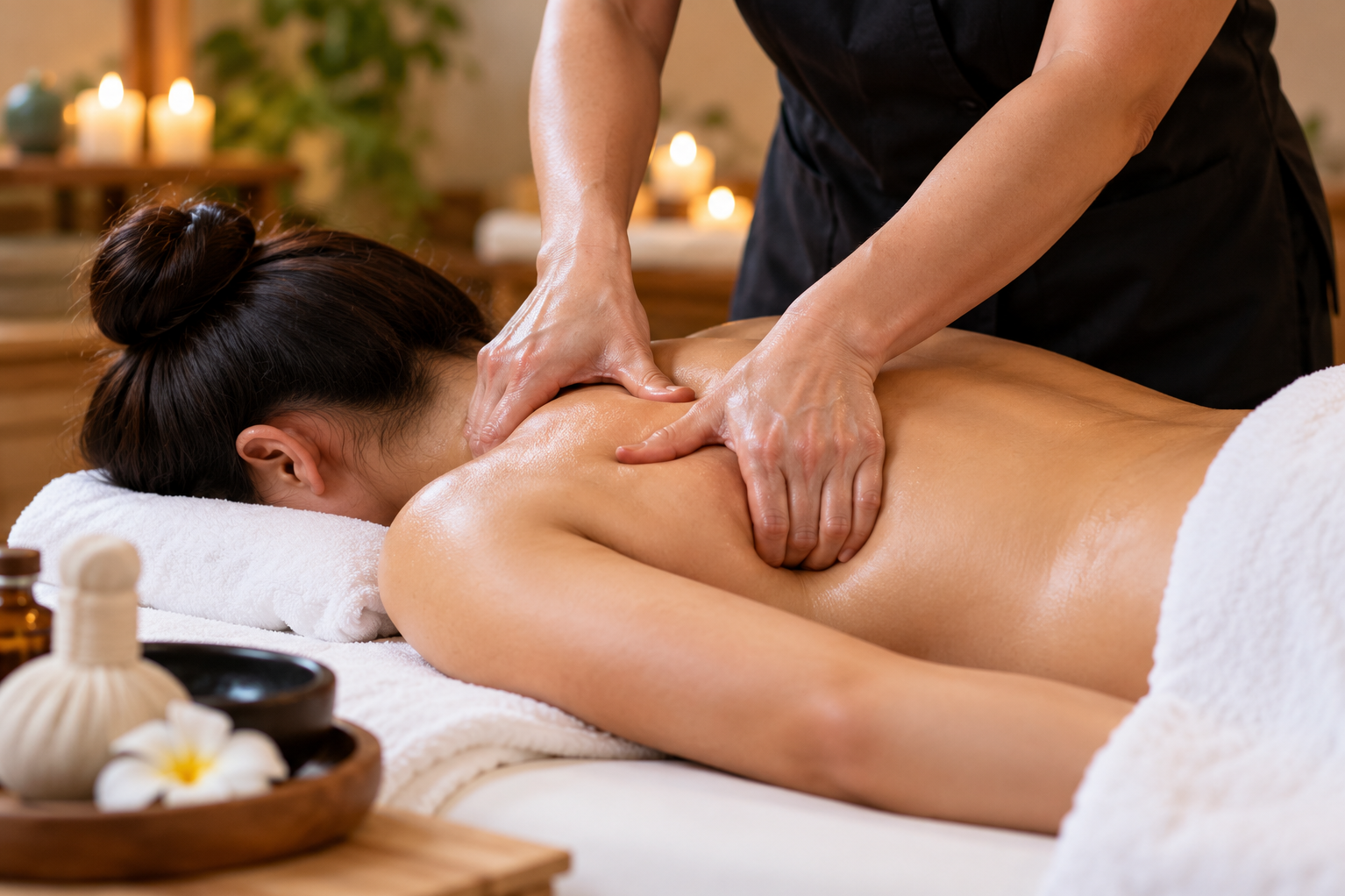
Muscle tightness can develop gradually when the body spends long hours in repetitive positions. Office professionals, business owners, drivers, and people with physically demanding routines often experience stiffness around the shoulders, neck, lower back, and legs. When ordinary relaxation techniques provide only temporary comfort, deep tissue massage therapy may be worth considering.
Unlike a gentle relaxation massage, this technique uses slow, controlled pressure to work on deeper muscle layers and surrounding connective tissues. The objective is to address areas of persistent tension while respecting individual comfort levels.
Understanding How Deep Tissue Massage Works
Deep tissue massage involves deliberate strokes and sustained pressure applied to specific muscle groups. A therapist may use fingertips, knuckles, forearms, and elbows depending on the treatment area and the client's comfort.
The technique commonly focuses on:
- Tight shoulder muscles associated with prolonged desk work
- Lower back stiffness linked to repetitive movements
- Muscle tension around the upper back and neck
- Leg discomfort following extended periods of standing
- Localized tightness caused by physically demanding activities
Pressure should remain manageable throughout the session. Deep tissue massage does not need to be extremely painful to be effective.
Why Muscle Tension Develops During Everyday Activities
Muscles respond to movement, posture, workload, and recovery habits. Sitting continuously without changing position can contribute to discomfort, particularly when combined with limited physical activity.
Working professionals travelling between Swargate, Camp, and other commercial areas of Pune may spend considerable time sitting in offices and vehicles.
Similarly, residents of Bibewadi, Katraj, and Dhankawadi may experience muscle fatigue after long commutes and demanding work schedules.
Massage can provide temporary relief from muscle tightness, although recurring discomfort may also require changes in posture, movement habits, and physical activity.
What Happens During a Deep Tissue Massage Session
A professional session generally begins with a brief discussion about the client's concerns.
The therapist may ask about:
- Areas experiencing stiffness
- Previous injuries and relevant medical conditions
- Current pain levels
- Preferred massage pressure
- Sensitivity to particular movements
The treatment usually begins with lighter strokes to prepare the muscles before progressing to more focused pressure.
Clients should communicate immediately if any technique causes sharp pain, numbness, tingling, or unusual discomfort.
A therapist may adjust pressure, change positioning, or avoid sensitive areas based on the feedback received.
Potential Benefits of Deep Tissue Massage Therapy
The experience varies according to muscle condition, treatment intensity, and individual response.
Possible benefits include reduced feelings of muscular tightness, temporary improvement in comfort, relaxation, and easier movement following a session.
Some people also find that focused massage helps them become more aware of areas where they habitually hold tension.
However, massage cannot correct every cause of pain. Persistent symptoms caused by nerve compression, joint disorders, or injuries require appropriate assessment.
Who Should Take Additional Precautions
Deep pressure may not be suitable for everyone.
People with recent injuries, suspected blood clots, bleeding disorders, significant osteoporosis, active skin infections, or certain medical conditions should obtain appropriate medical guidance before undergoing treatment.
Anyone taking blood-thinning medication should also disclose this information before a session.
Pregnant clients may require specially adapted techniques rather than conventional deep tissue treatment.
Frequently Asked Questions
Is deep tissue massage supposed to hurt?
Some pressure and temporary tenderness may occur, but sharp pain is not expected. Clients should be able to communicate comfortably throughout the treatment.
How long does a typical session last?
Sessions commonly range from 30 to 90 minutes, depending on the areas being treated and the service selected.
Can deep tissue massage help with back pain?
It may provide temporary relief when discomfort is associated with muscular tension. Persistent, severe, or unexplained back pain should be assessed before massage.
How often should someone book a session?
Frequency depends on personal comfort, activity levels, symptoms, and response to previous treatments. There is no universal schedule.
Building Better Recovery Habits
Deep tissue massage can complement a routine that includes regular movement, suitable exercise, adequate rest, and attention to workstation ergonomics.
For adults managing demanding schedules in Pune, Maharashtra, understanding the technique helps them choose massage services based on their actual needs rather than assuming that stronger pressure always produces better results.
The most useful session is one that addresses specific concerns while maintaining comfort, clear communication, and appropriate safety precautions.